







An editorial series by Patricia Marshall Harris | Classie Media
When society discusses caregiving, the conversation frequently centers on logistical checklists, medical appointments, and daily schedules. But it is time to speak the absolute truth about this reality: To be a caregiver is to undertake an extraordinary, overwhelming, and near-sacred responsibility. No matter if an individual is caring for a spouse, an aging parent, a sibling, or a dear friend, that person has essentially stepped up to become entirely responsible for another human being’s life, safety, and dignity. It is a role that completely reshapes a person’s days, sleepless nights, and mental well-being. It is not merely a task on a to-do list; it is a profound emotional commitment that demands a person’s constant presence, energy, and spirit. Yet, because there is no universal roadmap for this journey, most families are left wandering in the dark, trying to figure out how to carry this immense weight before they break.
The deepest tragedy of the current healthcare and legal systems is that this deeply personal, intimate act of love is forced to collide with a cold, rigid, and transactional financial reality. The landscape feels inherently unjust. While a caregiver pours their heart into keeping a loved one safe, they are simultaneously forced to fight through a maze of familial financial secrecy, banking regulations, and property laws. Parents, fiercely clinging to their lifelong independence, routinely refuse to share their financial status or resist putting an adult child’s name on a deed.

In doing so, they unwittingly set an administrative trap that forces the family estate straight into the grueling, expensive, and highly public hands of probate court.
Families must bridge this gap. Looking at the transactional side of caregiving is not a cold betrayal of love; it is the ultimate act of protection. To preserve the emotional sanctuary of caregiving, families must build a clinical shield that protects both the vulnerable loved one’s wealth and the caregiver’s own financial future. Here is the operational roadmap to secure that safety net before a medical crisis hits.
The legal access checklist: Securing administrative control
- Durable Financial Power of Attorney (POA): This is the single most vital document in the caregiving toolkit. Unlike a standard POA, a Durable POA remains fully valid if a loved one becomes mentally or physically incapacitated. It grants the designated agent immediate legal authority to pay bills, manage investments, and handle taxes from the loved one’s accounts, keeping the household running without interruption.
• Springing Power of Attorney: If an aging parent or spouse is highly private and uncomfortable granting immediate access, a Springing POA serves as the ideal compromise. It remains entirely dormant and only “springs” into active legal authority the exact moment a licensed physician certifies that the individual is incapacitated.
- Revocable living trusts: Shifting property into a trust is the gold standard for avoiding the nightmare of probate. The asset owner acts as the primary trustee but designates a trusted adult child or family member as the “Successor Trustee.” If the owner becomes ill or passes away, the successor steps seamlessly into the management role, keeping the family home out of the court system.
- Convenience accounts: Certain states allow individuals to add a family member to a bank account strictly as an authorized signer for check-writing and bill-paying, without making that person a legal co-owner of the actual funds.

The liability shield: Protecting the caregiver’s future
- Never co-sign medical debt: Healthcare facilities and nursing homes routinely slip “Responsible Party” clauses into admission paperwork. Caregivers should never sign as a co-signer or guarantor. All financial and medical forms must be signed strictly using the designation as the Power of Attorney (e.g., “Jane Doe, as POA for John Doe”). This ensures that the financial liability remains tethered entirely to the loved one’s estate, not the caregiver’s personal savings.
- Avoid joint account co-ownership: Adding a caregiver’s name as a joint owner to a parent’s bank account seems like an easy shortcut, but legally, that money becomes half theirs. If the caregiver faces a personal lawsuit, a debt collection, or a messy divorce, the parent’s life savings can be legally seized. Stick to a durable POA instead.
- Beware of the Medicaid look-back: If a loved one eventually requires Medicaid to pay for long-term nursing care, the government will audit the last five years of their financial history. Co-mingling funds, moving large sums of money into a caregiver’s personal account, or transferring property below market value will trigger severe penalties, delaying coverage and leaving the family to foot the bill out-of-pocket.
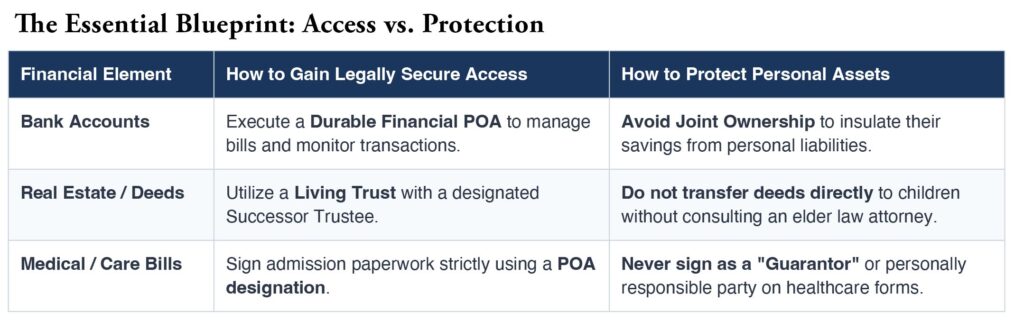
Structural foundations: Navigating the caregiving infrastructure
- Area Agencies on Aging (AAA): Established under the federal Older Americans Act, these mandated cabinet-level networks exist in virtually every county and municipality across the United States. In Philadelphia, this infrastructure is anchored by the Philadelphia Corporation for Aging (pcacares.org). Regardless of which state a caregiver resides in, local AAAs provide free caseworkers, meal programs, senior housing guidance, and direct pathways to state-specific long-term care financial assistance. Caregivers can easily locate their regional agency through the national Eldercare Locator (eldercare.acl.gov).
- Free and Low-Cost Legal Aid Services: Securing a Durable Power of Attorney or estate plan does not have to depend on personal wealth. Every state operates federally funded Legal Aid programs that provide free or low-cost legal defense and document preparation for low-income seniors and vulnerable adults. Resources like the National Legal Aid & Defender Association (nlada.org) or the Legal Services Corporation directory (lsc.gov) connect families directly to regional pro bono elder law professionals.
Confronting the truth and seeking peace within
The reality of caregiving is unyielding, global, and grim; it cannot, and should not, be sugarcoated. The physical toll is exhaustive, and the administrative machinery can feel completely indifferent to human suffering. Yet, making these difficult structural decisions early—on the front end of reality, rather than scrambling in panic on the back end of a catastrophe—is the highest form of clarity. Truth is truth, and confronting it allows a family to build a fortress before the storm arrives.
But while the legal and financial frameworks provide an external shield, a caregiver’s internal survival requires a different kind of anchor.
When the external world becomes too heavy, an individual must learn the practice of going within. Whether a caregiver finds solace in their religion, quiet sanctuary in meditation, or strength through a personal form of spiritual self-preservation, seeking a space of quiet respite is non-negotiable.
Caregiving is a marathon of the soul. Embracing one’s faith and practicing intentional inner stillness serves as a vital reminder that no matter how dark the current room may seem, this season, too, shall pass.
This is for informational purposes only. For medical advice or diagnosis, consult a professional. AI responses may include mistakes.
Disclaimer: The advice offered in this commentary is intended for informational purposes only; it is not intended to replace or substitute for any medical, or other professional advice. If you have specific concerns or a situation in which you require medical help, please consult with an appropriately trained and qualified doctor or specialist. The author, newspaper and publisher are not responsible for the outcome or results of following any advice in any given situation.










Leave a Comment