




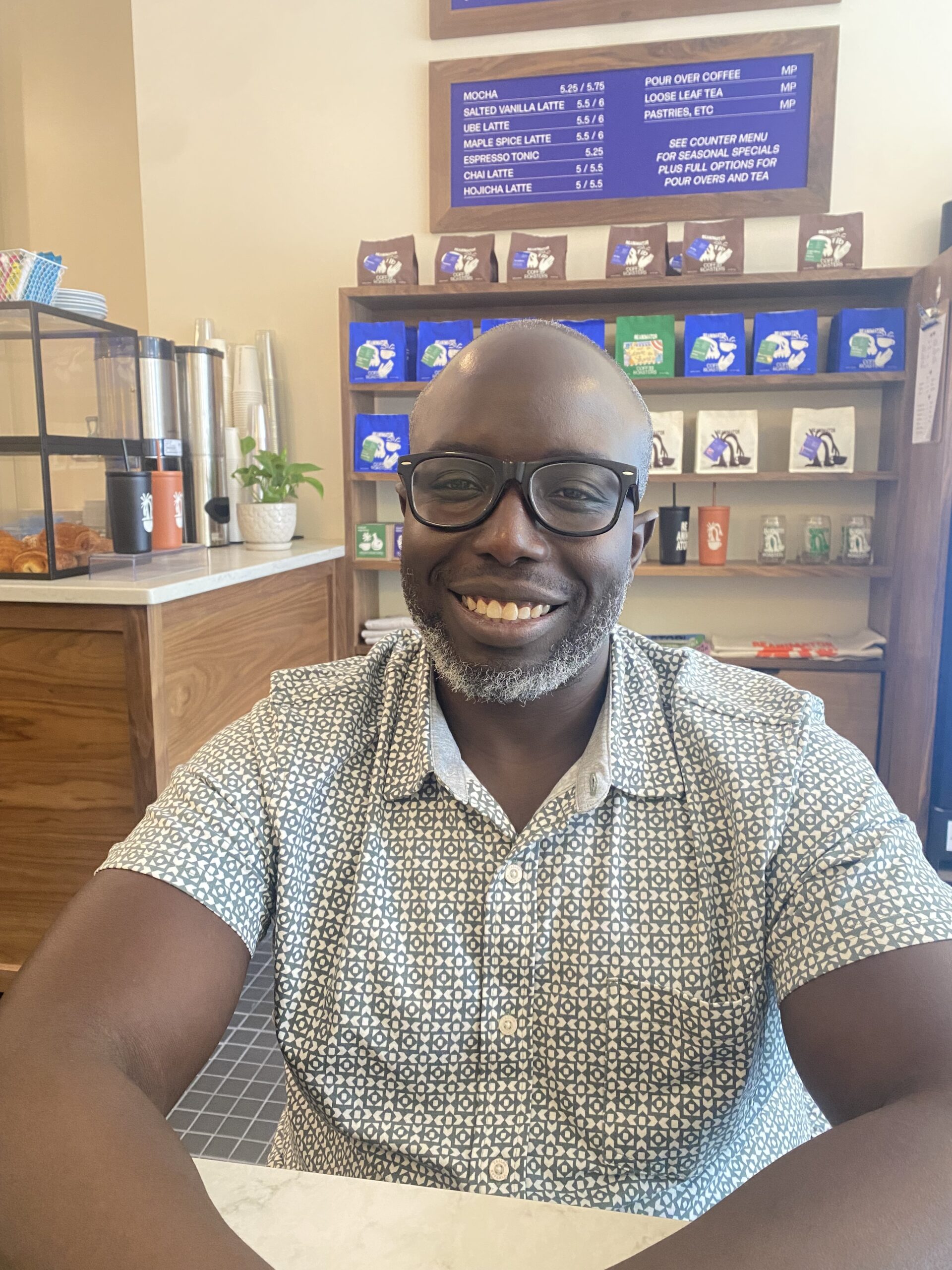
Bunting Macauley
Photo: Constance Garcia-Barrio
By Constance Garcia-Barrio
Until recently, 43-year-old Bunting Macauley of East Falls, believed that he would not live over 40.
“I was born with sickle cell disease [SCD],” Bunting said of the inherited blood disease that can damage the body’s organs. “Treatment for SCD has advanced since my childhood, but I was told that I would die in my 40s.”
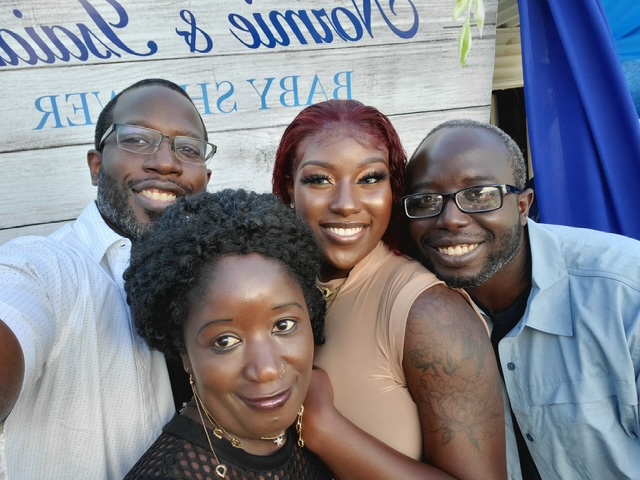
Bunting (at far right) with his brother and two sisters.
Photo courtesy: Bunting Macauley
A 2022 study published in “Blood,” the journal of the American Society of Hematology, put the median age for death of SCD patients at 45. Bunting, a salesforce administrator and business analyst, celebrated his 39th birthday thinking that it was the beginning of the end. But at age 42, after decades of pain and fatigue, Bunting gambled on a medical procedure, fraught with risks, that could rewrite his anticipated life script.
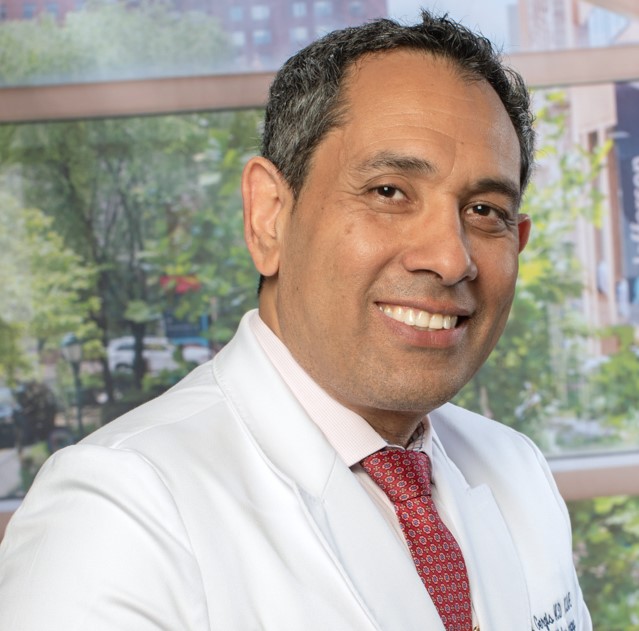
This September, National Sickle Cell Awareness Month, is a good opportunity to honor Bunting’s courage and endurance, as well as the skill of his medical team, especially his physicians. Two doctors at Thomas Jefferson University Hospital played crucial roles in his treatment: Sophie Lanzkron, MD, MHS, professor of medicine at Jefferson and director of the hospital’s Division of Hematology, is internationally known for pioneering care for patients with SCD, and Usama Gergis, MD, MBA, professor in the Department of Medical Oncology, the director of the Stem Cell Transplant and Cellular Therapy Program.
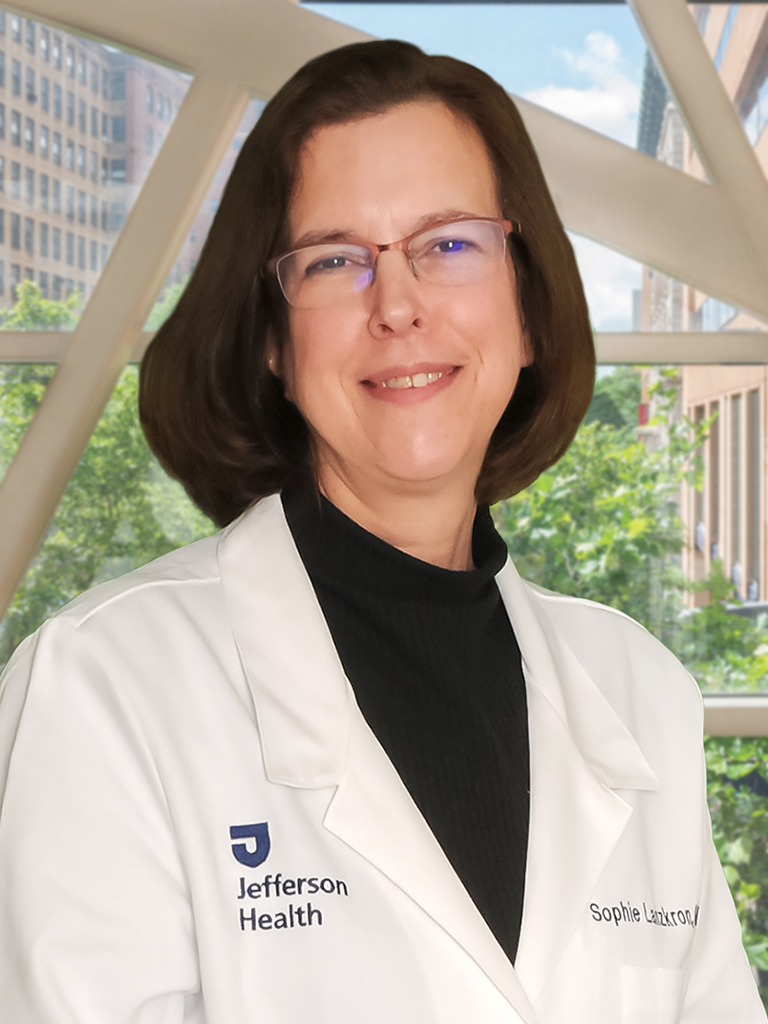
Sophie Lanzkron, MD, MHS
SCD affects one in 350 Black Americans, according to the Sickle Cell Disease Association of America, a nonprofit that provides resources and support for patients and their families. More than 90% of SCD patients are of African heritage, the association says.
“With SCD, your red blood cells, which are normally round, become crescent shaped and rigid,” Bunting said, adding that they become “sticky” or prone to clumping. “It’s like a traffic jam in your veins. Trapped blood cells slow or stop blood and oxygen from reaching tissues. That can cause sharp pain.”
Nowadays, most newborns are screened for SCD, but such testing was not yet routine in Bunting’s infancy.
“My mother took me to the doctor when I was 2 because of the pain,” he said. “I was diagnosed then.”
As a child, Bunting fought the limits of his illness.
“I tried wrestling and playing football, but I had too much pain,” he said. “With SCD, you can have a heart attack or a stroke at any time due to blood clots. I had to have a hip replacement in my 30s because SCD damaged my cartilage. The illness affects you physically, emotionally, and spiritually. Some SCD patients become fatalistic.”

Bunting (on the left) with his brother and mother.
Photo courtesy: Bunting Macauley
SCD patients are treated with medication and transfusions, but Bunting’s doctors suggested another possibility when he was 21 — a bone marrow, or stem cell transplant. Marrow, a soft fatty tissue inside of one’s bones, produces white blood cells, red blood cells, and platelets. The latter form clots and stop bleeding.
“Allogenic stem cell transplant — when a family member donates bone marrow to a person with sickle cell disease — if successful, can cure the disease,” Lanzkron said. “A transplant can stop painful crises, reduce the risk of organ damage, and improve both quality of life and life expectancy.”

Bunting with his father.
Photo courtesy: Bunting Macauley
Bunting needed a bone marrow donor whose blood matched his own. Of his three siblings — two sisters and a brother — Bunting’s brother, Robert, was an excellent match because they shared tissue type markers on their cells, Lanzkron said.
But despite Bunting’s and Robert’s high hopes, Bunting’s body rejected Robert’s blood cells.
Bunting soldiered on for more than 20 years, battling pain and exhaustion. Then SCD expert Lanzkron, took charge of his care in 2024. She said something that shocked him.
“She said, ‘We could try the transplant again,’” Bunting said. “I hadn’t realized that a second try was possible.” He jumped at the chance. However, the treatment came with big risks. The failed first treatment cast its shadow.
“We approached Bunting’s [second] transplant very deliberately,” Gergis said. “We performed extensive tests, evaluating his heart, lungs, kidneys and other vital organs to understand what his body could safely tolerate. Bunting’s case was especially challenging because he was at the older end of the age spectrum for someone undergoing stem cell transplantation for sickle cell disease.”
Bunting’s rigorous preparation included chemotherapy. “I was in with the cancer patients because the transplant required chemo to clear out my bone marrow,” Bunting said.
That step basically dismantles the body’s immune system.
“Patients must be supported in the hospital while new stem cells grow,” Gergis said, noting that patients are extremely vulnerable to infections during that time. “It can take one or two years for full immune recovery.”
Discharged from the hospital after five weeks, Bunting left with much optimism and the tons of books he’d brought with him to pass the time.
June 2026 marked the one-year milestone for Bunting. Doctors Lanzkron and Gergis checked him regularly, but he had no sickle cell crises during that time. They pronounced him cured.
Bunting, who goes about his days with quiet joy, takes lessons learned during his illness with him.
“I can easily put myself in someone else’s shoes,” he said.
He is keenly aware that serious illness can affect the whole family.
“My brother has been carrying around the knowledge that his blood is a [genetic] match for mine,” Bunting said. “He was very careful of his own health because he wanted to be a donor if I needed him. He’s not just my brother. He’s my best friend.”
New vistas have opened for Bunting.
“I don’t have to go to Planet Fitness late at night to limit possible exposure to illnesses,” He said. “I can go anytime. And I can travel now. I don’t have to worry about having a sickle cell crisis abroad. I’m going to Spain next year.”
Besides sophisticated medical treatment, spirituality played a part in Bunting’s healing.
“Prayer helped me stay joyful,” Bunting said, a member of the Greater Philadelphia Church of God. “Things may take a long time, but nothing is impossible. I thank God I can have a new life,” he said. “It’s honestly God’s mercy.”
Resources for families
Books— “My Friend Jen” by Jenica Leah; Aditya Permana (illustrator) — “There is nothing that my friend Jen can’t do, but on the inside, she’s a little different to me and you.” As Jen’s friend tells us a story, you will learn a few simple tips on how to stay well with Sickle Cell. A Little Different is the first in the series of “My Friend Jen” books. The series of children’s books aims to create better understanding and awareness of the blood disorder of Sickle Cell Anemia in a fun and informative way.
ISBN: 9781535218085
Publication Date: 2016-08-11
“My Brother Has Sickle Cell” by Erica D. Gamble
ISBN: 9781491869291
Publication Date: 2014-03-01
Websites–Kids Health.org- “Do You Know About Sickle Cell Anemia?”
www.kidshealth.org/en/kids/sickle-cell.html
The National Alliance of Sickle Cell Centers and it has a map identifying where people can go to find high-quality adult and pediatric care for sickle cell disease.
www.sicklecellcenters.org










Leave a Comment