




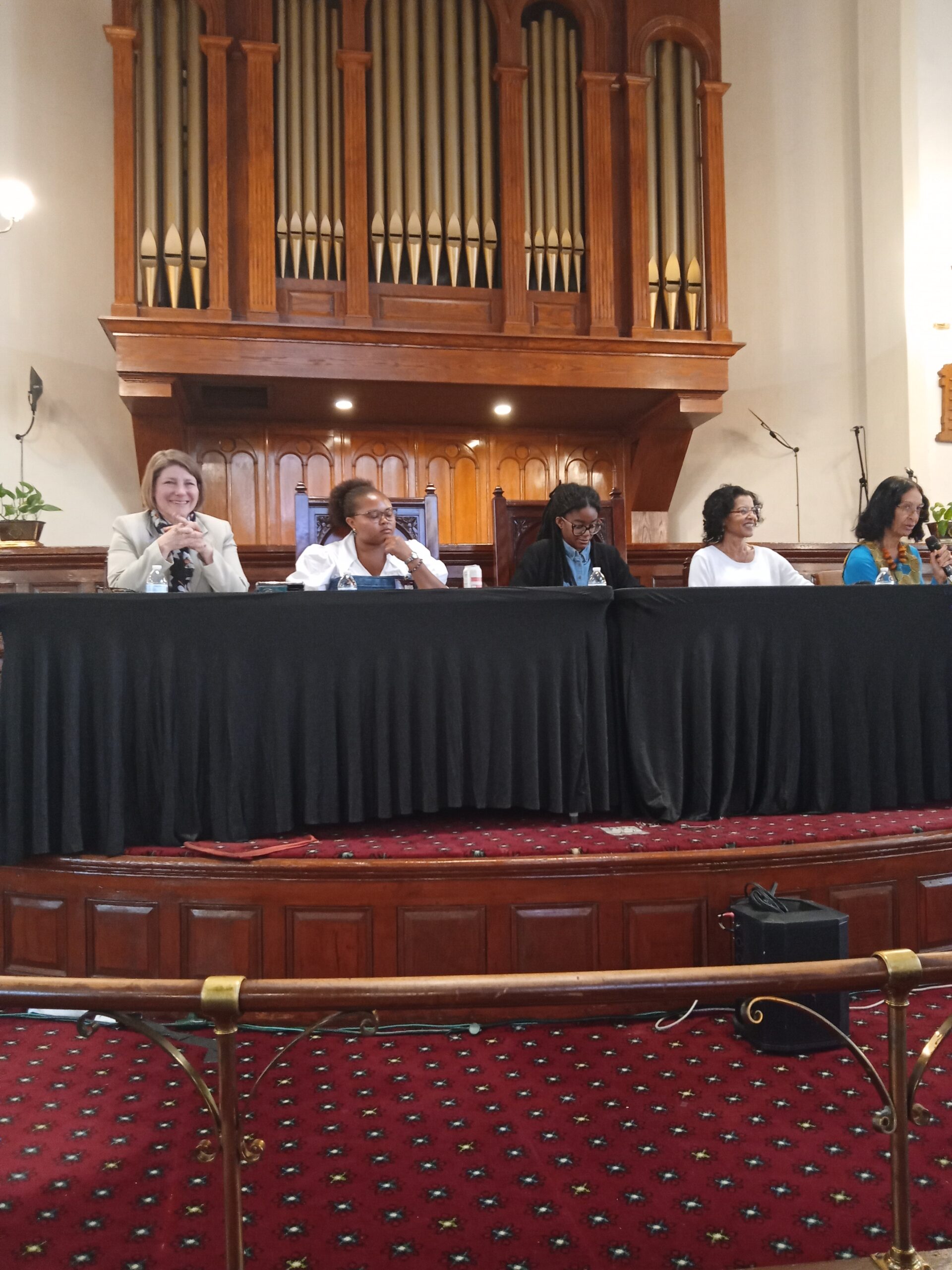
A panel at the Colored Conventions Conference discussed Philadelphia’s superb Black history archives.
Photo: Constance Garcia-Barrio
By Constance Garcia-Barrio
One could imagine the echoing voices of the ancestors at the 2026 Colored Conventions Conference at Mother Bethel AME Church this past September. An urgency seemed to ripple through conference guests, perhaps akin to that felt by delegates to the first convention held here almost 200 years ago.
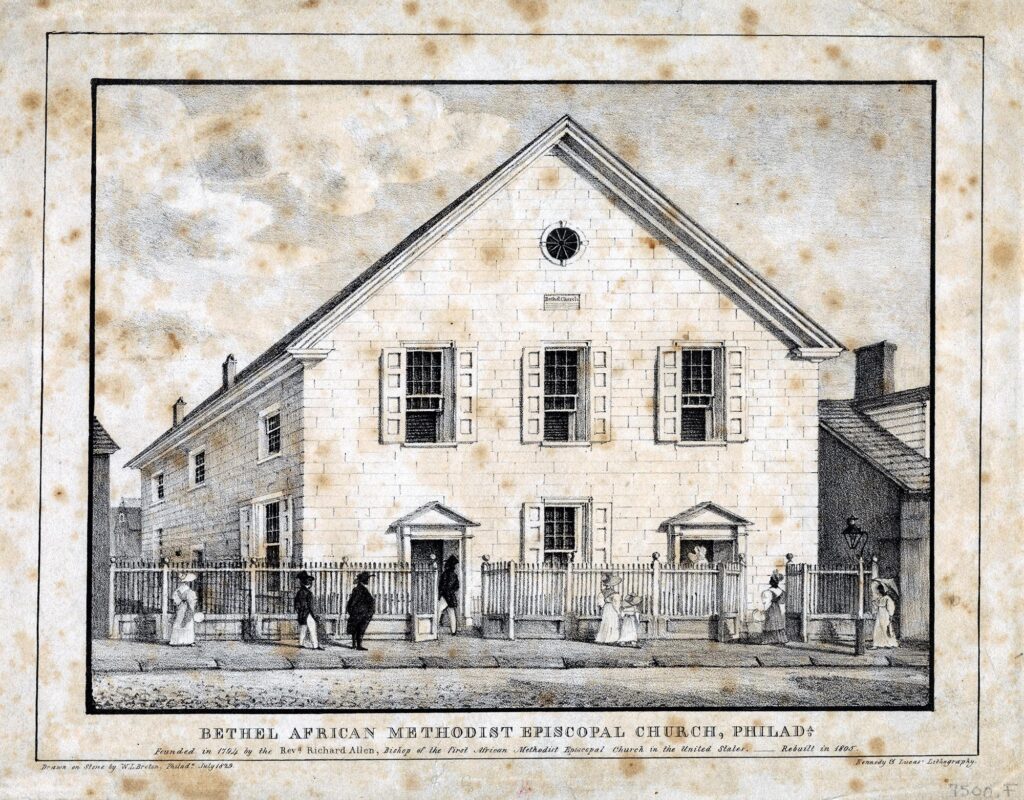
Photo courtesy: The Library Company of Philadelphia.
Colored Conventions began in response to a vicious, calculated race riot in 1829. In August of that year, white mobs stormed through Cincinnati’s Black neighborhoods, beating residents and destroying homes and businesses. Their lives in shreds, more than half of Cincinnati’s Black population left the city permanently. Some resettled in Canada while others moved elsewhere.
Word of the destruction soon spread. Free Black people throughout the U.S. grappled with whether to take their chances and stay where they were or seek safety by moving away. Convention goers asked another critical question: How would they protect themselves if they chose to remain in their homes?
In 1830, Rev. Richard Allen, who established the first African Methodist Episcopal (AME) church, called the first convention at Mother Bethel to discuss what steps Black Philadelphians should take.
It comes as no surprise that Mother Bethel pioneered the Colored Conventions Movement. The church has a long tradition of activism, said the Rev. Carolyn Cavaness, 53rd pastor of Mother Bethel.
“This church has never been merely a building,” Cavaness wrote in her welcome letter. “It is holy ground. It is a freedom space,” she said of Mother Bethel, a safe house in antebellum times for Black people escaping from slavery. “It is a place where our ancestors prayed, organized, strategized, and dreamed.”
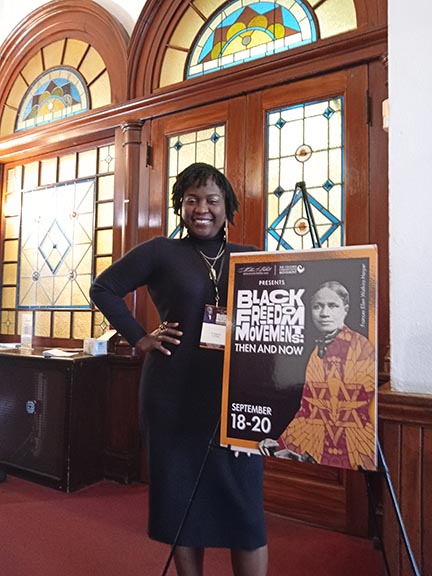
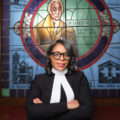
Dr. Stephanie Joy Tisdale, with the University of Pennsylvania’s Graduate School of Education, moderated a panel.
Photo: Constance Garcia-Barrio
The energy and approaches that moved our ancestors could serve Black communities today, said Joi Weathers, a writer, public historian and program director for the 2026 Colored Conventions Conference.
“This is not only a commemorative conference. The mid-terms are coming up,” she said, speaking of the need to glean guidance from the strategies and minutes of past Colored Conventions.
Conference attendees agreed. The banning of books and systematic attempts to erase or distort Black history make organizing critical now, they said.
Speakers and panelists reminded the audience of the scope and accomplishments of the Colored Conventions Movement. The first convention drew Black leaders from across the region, noted Derrick Spires, Ph.D., associate professor in the University of Delaware’s English Department.
“Representatives came here from Maryland and Delaware,” Spires said, adding that many of them were clergymen. “Ministers had a degree of independence with a church as their foundation.”
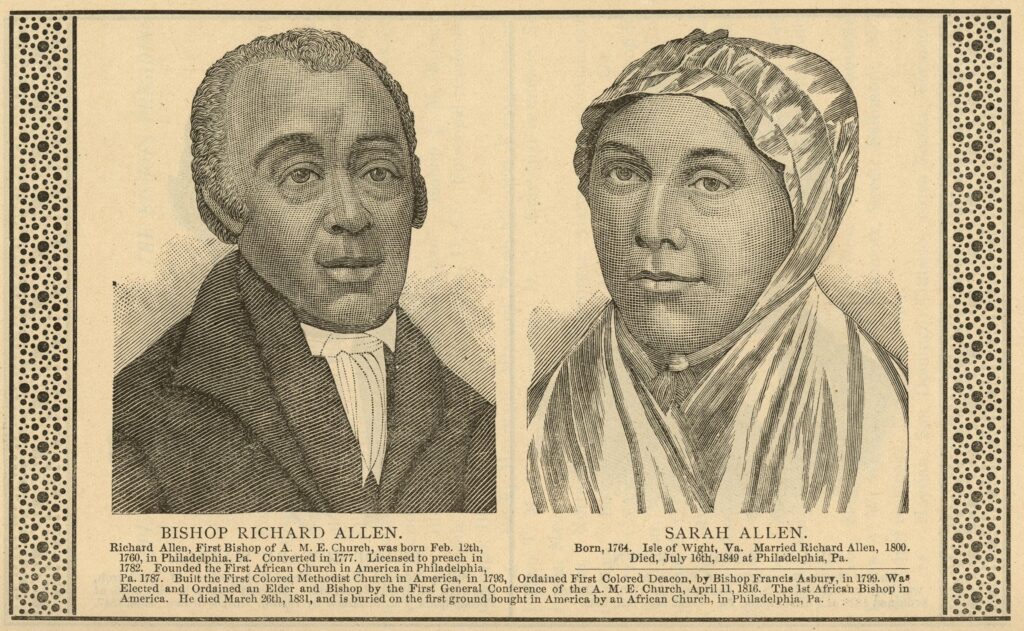
An illustration of the first bishop of the A.M.E. Church, Richard Allen and his wife Sarah Allen.
Photo courtesy: The Library Company of Philadelphia.
“[In time], Ohio, Delaware, and other states held Colored Conventions,” said Spires, curator of “African American Writing. 1773-1910,” an exhibition at Cornell University.
Colored Conventions continued after the Civil War, Spires said.
“A Colored Convention was held in Vicksburg, Mississippi, in 1865,” he said. “HBCUs [Historically Black Colleges and Universities] were founded out of the Colored Conventions Movement.”
The conventions also laid the foundation for civil rights organizations like the NAACP, Spires added.
Conference goer Llewellyn Smith, an independent documentary filmmaker and co-founder of the BlueSpark Collaborative, an award-winning media company, noted the role of women in Colored Conventions.
“Women raised funds for the conventions and often arranged for food for the delegates,” Smith said.
The Colored Convention Project, a digital collection covering 1830 through 1900 of Black political organizing, mentions the role of women. The collection includes searchable archives, transcribed minutes, and digital exhibitions.
For example, the project includes a newspaper clipping about Mrs. Serena Gardiner, owner of “a genteel private boardinghouse at No. 13 Elizabeth Street … where respectable persons of color [could] be accommodated…” This advertisement ran in “The Liberator,” an abolitionist newspaper, in 1835.
Stephanie Tisdale, Ph.D., lead instructional coach in the University of Pennsylvania’s Graduate School of Education, moderated a panel entitled, “Experiencing the Voices of the Colored Conventions Movement,” that centered on women. Tisdale gave a presentation on Fanny Jackson Coppin.
“She was an educator at the Institute for Colored Youth,” Tisdale said.
Founded in 1837, the institute later became Cheyney University. Coppin taught at the institute for 37 years and became the first Black woman to serve as a school principal and school district superintendent. Coppin’s achievements in education include establishing a system of practice teaching.
“Our ancestors gave us blueprints,” Tisdale said.
Informational tables along the sides of the auditorium complemented panelists’ historical perspective with pamphlets and other material on current issues. One table had instructions on how to vote by mail for college students. Young people attended the conference and took part in pre-conference programming.
Another table offered material about The Ona Judge Coalition (TOJC), a nonprofit, nonpartisan, multi-racial alliance of Philadelphians.
Formed in January 2026 after the National Park Service removed educational and historical panels from the President’s House at 6th and Market Streets, TOJC seeks to preserve a complete and accurate history of slavery on the site of former President George Washington’s residence. “Our goal is to preserve and elevate this history,” a TOJC flyer said.
Thus, the Colored Conventions Conference offered guests inspiration from activism in the past and guidance about where to direct their efforts toward social justice today.
For details about upcoming events at Mother Bethel AME Church, visit: https://motherbethel.org/church-events-calendar/.









Leave a Comment